Opening Date: September 24, 2026
Curator: Yael Boverman-Attas
Participating Artists:
Eva Avidar, Max Epstein, Gabriel Klasmer, Avner Levinson, Sharon Pazner, Galit Shvo
“Everything changes,” wrote the poet Bertolt Brecht at the close of World War II. “With their last breath, a person can begin anew.” This exhibition explores the duality inherent in this delicate balance – between endings and beginnings, between total devastation on the brink of obliteration and the tremendous force of renewed growth emerging from pain and fracture, both personal and collective. From the depths of despair, humanity summons the power of self-creation, to heal and flourish from its roots – material and spiritual alike.
Presented within the Bible Lands Museum in Jerusalem, these contemporary works engage in dialogue with their ancient roots. The museum’s antiquities give presence to those who turned to matter – stone, wood, and iron – thousands of years ago, in their own search for language, meaning, and stability.
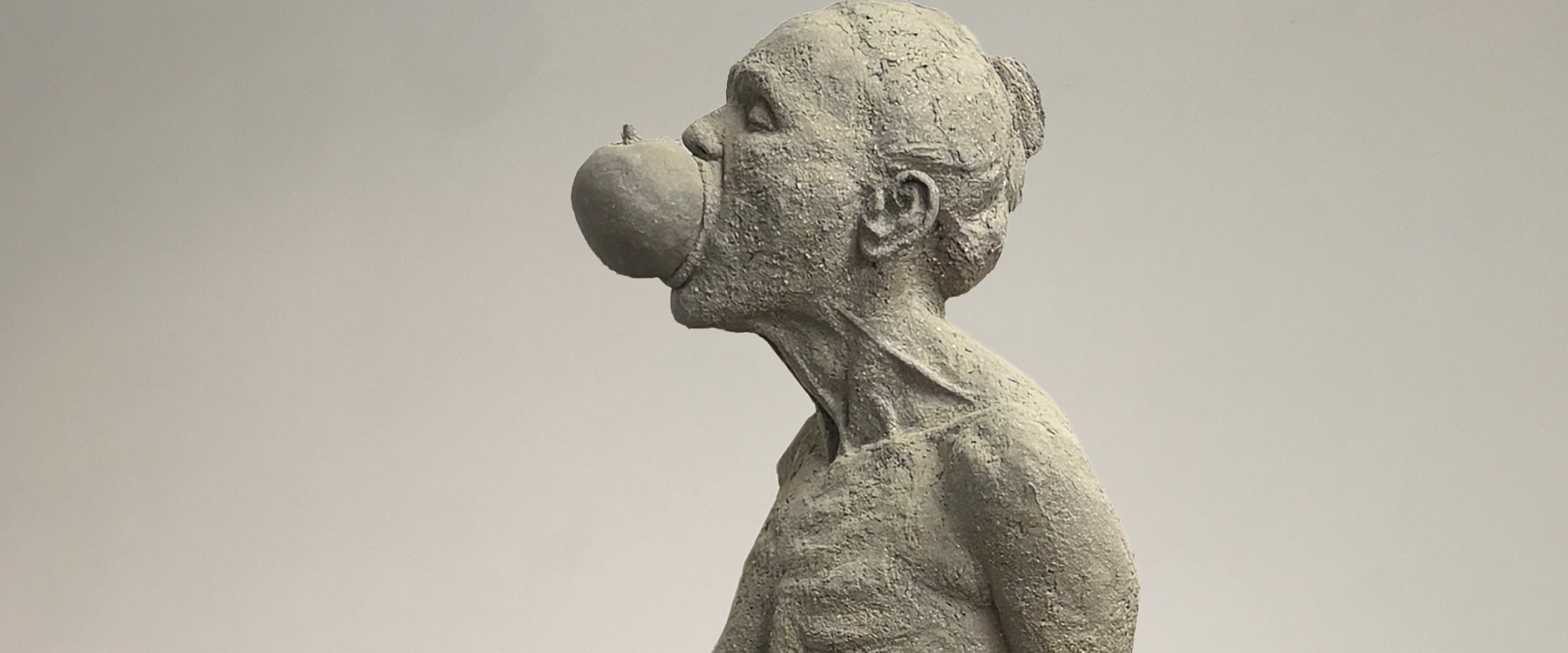
Eva Avidar’s scarred figure stands in a tense posture, suspended on the brink. In her open mouth rests the elusive fruit of the Garden of Eden: if she bites into it, she will lose it: her hands, affixed to her own body in an attempt to steady herself, will never be able to grasp it.
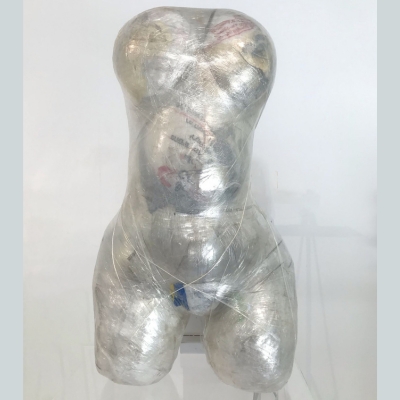
Gabriel Klasmer’s torso sculpture, crafted from everyday materials such as plastic bags and aluminum foil, consecrates the human form in the tradition of classical art. It echoes archaeological figures while simultaneously conveying ephemerality and simplicity.
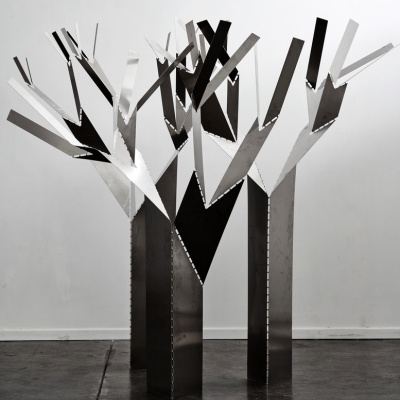
Galit Shvo’s aluminum trees, created before the events of October 7, 2023 and blackened in its aftermath, stand as somber witness, yet also as promise—of renewed growth and recovery from catastrophe, like a forest regenerating itself, steadfast and resilient after fire.
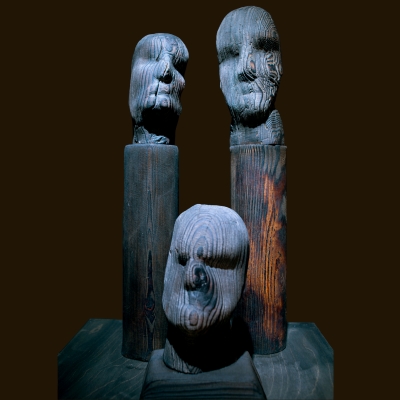
Max Epstein’s figures, hewn with an axe from charred wood, continue to ache in our flesh as a memorial to the blow we sustained, yet they stand erect and unwavering.
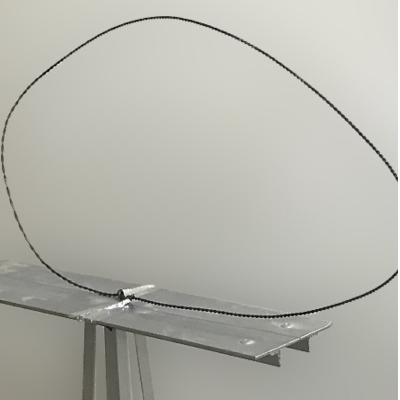
Avner Levinson pursues a constant search for form and identity which continue to elude and transform before our eyes, while at the same time maintaining a delicate balance between the material, the abstract, and the spiritual.
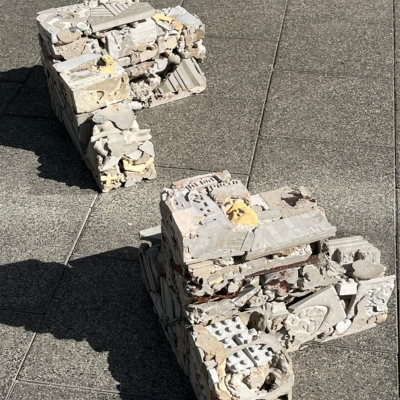
Sharon Pazner’s house—or more precisely, its destruction following October 7—and the grief it embodies, is rendered in corner delineations of concrete and clay, evoking fragments in an archaeological dig. Pazner invites viewers to move, as though through chambers of an aching heart, to feel, remember, and maybe to heal.
The exhibition seeks to restore faith in nature’s capacity for renewal and constancy, and in humanity itself—feeling, suffering, wavering, yet also ever-present, influential, and self-reconstructing. The artists’ vision captures the fragile equilibrium between humankind and nature, between humanity and fate, offering us pathways to improve, however incrementally, our condition. “As Humankind” – breathing, living – we must bear responsibility for its continuity, for the work of restoration and for its regeneration after crisis, siege, and destruction.